
.svg)
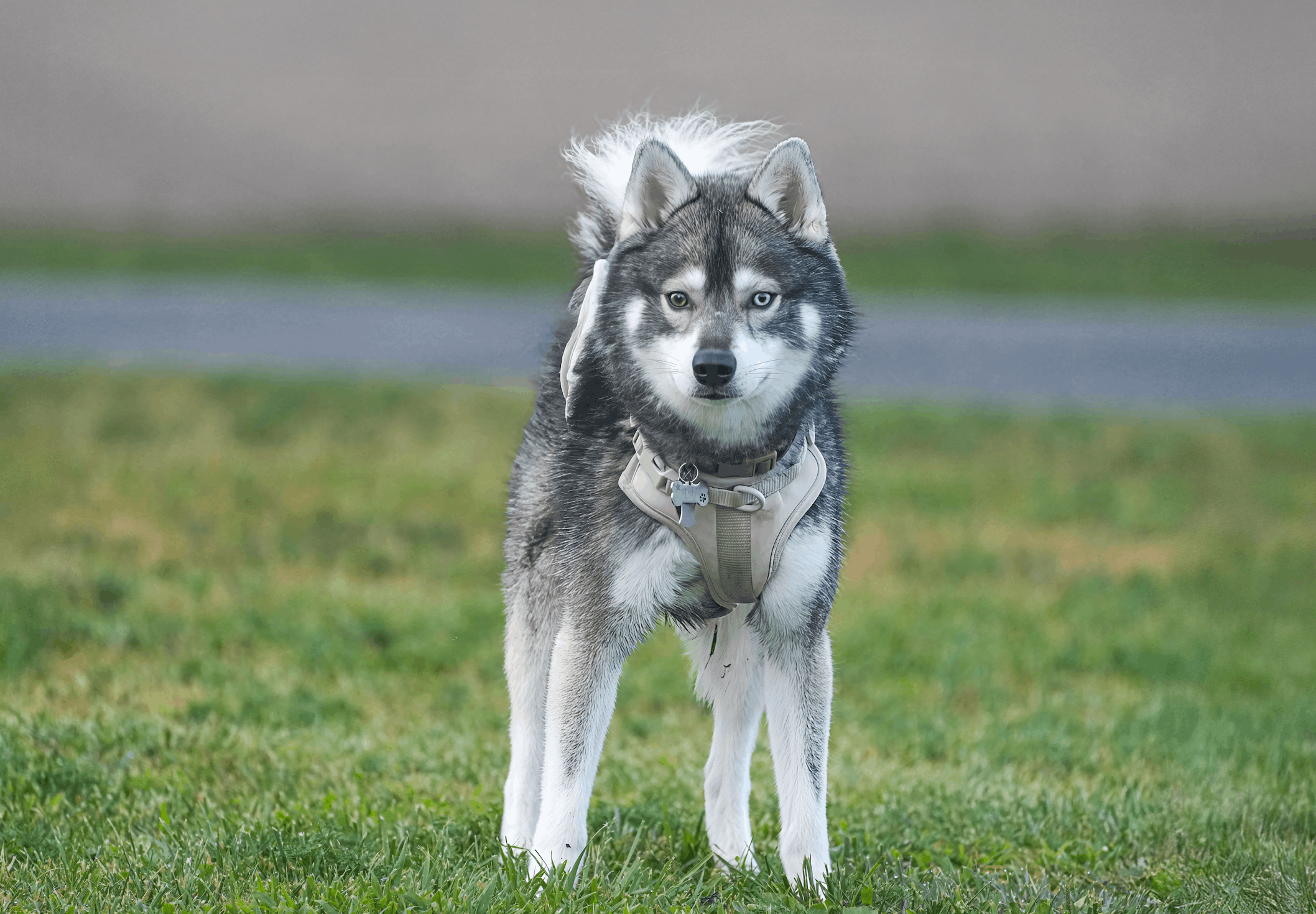
Pomskies are smart, curious and usually very aware of what is happening around them. They can learn new skills quickly, but their intelligence also means they may lose interest when training becomes repetitive or unclear.
Some Pomskies are highly motivated by food. Others will work harder for a toy, attention or the opportunity to continue exploring. Their individual personality matters, but the most effective training method remains consistent across most dogs.
Reward based training gives your Pomsky a clear reason to repeat the behavior you want. Combined with short sessions, good timing and realistic expectations, it creates a practical foundation for everything from basic manners to reliable recall.
Why reward based training works
Reward based training focuses on recognizing and rewarding the behaviors you want your Pomsky to repeat.
When your dog sits after being asked, looks at you instead of pulling toward another dog or returns when called, you immediately reward that decision. Over time, your Pomsky begins to understand which choices lead to positive outcomes.
A reward can be:
- A small treat
- A favorite toy
- A short game
- Verbal praise
- Access to something your dog wants, such as continuing the walk
The American Veterinary Society of Animal Behavior recommends reward based methods for dog training and behavior modification. It also advises against training methods that use pain, fear or intimidation.
For Pomskies, this approach is especially useful because it turns training into an activity they want to participate in. You are working with their curiosity and motivation rather than relying on confrontation.
Find the reward your Pomsky genuinely values
A reward only works when your dog wants it at that moment.
A piece of regular kibble may be enough while training in a quiet kitchen. The same reward may have very little value when your Pomsky is outside watching another dog, smelling something interesting or preparing to chase a bird.
Use rewards that match the difficulty of the situation.
For simple exercises at home, try kibble, praise or a quick game. In more distracting environments, use a higher value reward such as a small piece of cooked chicken or another dog safe treat your Pomsky enjoys.
Some Pomskies prefer movement and play over food. For these dogs, access to a toy or permission to continue exploring can become part of the reward.
Pay attention to what keeps your dog engaged. Motivation can change depending on the environment, time of day and level of distraction.
Keep each session short
Pomskies often learn better through several short training sessions than through one long lesson.
Aim for approximately two to five minutes at a time. You can practise while waiting for the kettle to boil, before putting down your dog’s food, during a walk or before opening the door to the garden.
Short sessions help your Pomsky remain focused and reduce the likelihood of frustration. Animal welfare organizations including Blue Cross and the RSPCA recommend short, regular training sessions rather than overwhelming dogs with long periods of repetition.
Try to finish while your dog is still interested. Ending after a successful repetition also leaves the session on a positive note.
Reward the exact moment your dog gets it right
Timing is one of the most important parts of dog training.
Your reward needs to arrive immediately after the behavior you want. When too much time passes, your Pomsky may connect the reward with something else they did afterward.
You can use a short marker word such as “yes” to identify the correct moment. A clicker can serve the same purpose.
For example, when teaching your Pomsky to sit:
- Ask for the sit once.
- Wait for your dog’s bottom to touch the floor.
- Say “yes” immediately.
- Give the reward.
The marker tells your dog exactly which action earned the reward. With repetition, this makes communication clearer and helps your Pomsky learn more efficiently.
Ask once and give your Pomsky time to respond
Repeating a cue several times can teach a dog that the first request does not matter.
Instead of saying “sit, sit, sit,” say the cue once and wait for a moment. Your Pomsky may need time to process what you asked, especially when learning something new.
When they respond correctly, mark and reward the behavior.
When they do not respond, consider whether the environment is too distracting or the exercise has progressed too quickly. Move somewhere quieter, simplify the task or use a lure to help them understand.
Training becomes much clearer when each cue has one consistent meaning.
Build focus before expecting obedience
Many training struggles begin because the dog is too distracted to listen.
Before asking for a sit, stay or recall, teach your Pomsky that checking in with you is valuable.
Start in a quiet room. Say your dog’s name once. The moment they look at you, mark the behavior and offer a reward.
Repeat this during everyday situations. Reward your Pomsky for voluntarily looking at you during walks, around visitors and before crossing a road.
This creates a useful habit. Your dog begins to check in with you even when you have not given a command.
Once you have their attention, other skills become easier to teach.
Practise new skills in different places
A Pomsky who sits perfectly in the living room may appear to forget everything at the park.
Dogs do not always understand that a cue means the same thing in every environment. A new location introduces different smells, sounds, people and movement.
Begin training in a calm place. Once your dog is responding consistently, practise in another room, then in the garden and eventually in quieter outdoor spaces.
Increase the difficulty gradually. The RSPCA recommends building duration, distance and distraction over time while giving the dog regular opportunities to succeed.
When moving to a more distracting location, make the exercise easier again. Ask for a shorter stay, reward more frequently and keep your Pomsky close.
Make recall worth returning for
Recall is one of the most important skills a Pomsky can learn.
Choose a clear recall cue and use it consistently. Begin indoors or in a secure enclosed area with very few distractions.
Say your dog’s name followed by the recall cue. Move backward to encourage them to follow you. When your Pomsky reaches you, reward generously.
Avoid calling your dog only when something enjoyable is about to end. Call them during walks, reward them and then release them to continue exploring. This teaches your Pomsky that coming back does not always mean the fun is over.
A long training line can provide more freedom while recall is still developing. It allows your dog to practise at a distance without being completely off lead in an unsecured area.
Never punish your Pomsky after they return, even when they took longer than expected. You want reaching you to remain a safe and rewarding choice.
Use everyday life as part of the training
Training does not need to happen only during planned sessions.
Your Pomsky is learning from what happens throughout the day. Everyday routines provide plenty of opportunities to reinforce calm and useful behavior.
You can ask your Pomsky to:
- Sit before receiving their food
- Wait briefly before going through a door
- Look at you before greeting someone
- Stand calmly while their harness is attached
- Settle on a bed while you prepare a meal
- Walk beside you for a few steps before being released to sniff
These small moments help training become part of normal life. They also show your dog that calm behavior often gives them access to what they want.
Prevent unwanted behavior when possible
Training becomes easier when your Pomsky is not constantly practising the behavior you are trying to change.
When your dog steals food from a low table every day, the behavior keeps being rewarded. When they repeatedly pull toward exciting smells and successfully reach them, pulling becomes more valuable.
Management helps prevent these patterns while you teach an alternative.
This may include storing food out of reach, using a gate, keeping your Pomsky on a training line or providing a chew while guests arrive.
Environmental management is recognized as an important part of humane dog training because it gives the dog more opportunities to make successful choices.
Meet their physical and mental needs
A Pomsky who has had no opportunity to move, sniff or use their brain may find it difficult to concentrate.
Training works best as part of a balanced routine that includes suitable exercise, rest, play and mental enrichment.
Useful activities can include:
- Sniffing walks
- Food puzzle toys
- Searching for treats around the home
- Learning simple tricks
- Playing with appropriate toys
- Short training games throughout the day
Mental stimulation can be just as valuable as physical exercise. Reward based training itself provides enrichment because it encourages dogs to think, solve problems and learn new skills.
The right amount of activity will depend on your Pomsky’s age, health, size and individual energy level. Puppies also need plenty of sleep and should not be expected to maintain an adult dog’s routine.
Stay consistent across the household
Your Pomsky will learn faster when everyone uses the same cues and follows the same rules.
Decide which words you will use for important behaviors such as sit, down, wait, come and leave it. Make sure each person rewards the same choices.
Mixed messages can make training confusing. When jumping is encouraged by one person and discouraged by another, your dog may struggle to understand what is expected.
Consistency also applies to boundaries. Decide whether your Pomsky is allowed on furniture, how greetings should happen and what behavior earns attention.
Clear and predictable communication makes it easier for your dog to make good decisions.
What to do when training stops working
When your Pomsky is struggling, look at the situation before assuming they are being stubborn.
Ask yourself:
- Is the environment too distracting?
- Does my dog understand the cue?
- Is the reward valuable enough?
- Has the session continued for too long?
- Is my dog tired, excited, worried or uncomfortable?
- Have I increased the difficulty too quickly?
Return to a simpler version of the exercise and reward smaller steps. Progress rarely happens in a perfectly straight line, particularly during adolescence or when practising in new environments.
Sudden behavior changes can also have a physical cause. Speak with your veterinarian when your Pomsky unexpectedly becomes reluctant to move, sensitive to touch, unusually reactive or unable to perform a familiar behavior.
For persistent fear, anxiety, aggression or separation related problems, seek support from a qualified reward based trainer or veterinary behavior professional.
The most effective Pomsky training routine
A practical Pomsky training routine can be simple:
- Choose one skill to practise.
- Train for two to five minutes.
- Use a reward your dog values.
- Mark the correct behavior immediately.
- Repeat a few successful times.
- Finish before your Pomsky loses interest.
- Practise again later in a slightly different situation.
The goal is to create clear, positive learning experiences that can be repeated consistently.
Pomskies are capable learners, but they need communication that makes sense to them. Reward the choices you want, manage situations they are not ready to handle and increase the difficulty gradually.
With patience and regular practice, training becomes part of the relationship you build with your Pomsky every day.


.svg)
.svg)